
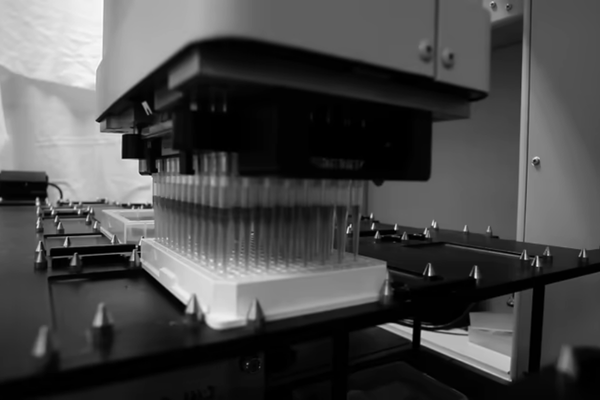
Morphokinetic Markers and the Landscape of Time Lapse Systems
The true innovation of the Time Lapse Incubator lies in its ability to quantify the tempo of early life, turning the qualitative assessment of morphology into objective, measurable time points.
These precise timings, known as Morphokinetic Markers, are critical developmental milestones used to predict an embryo’s viability and implantation potential. By focusing on the duration and synchrony of cell division, embryologists can identify patterns associated with healthy development and filter out embryos with non-optimal or erratic cleavage times.
Key Predictive Morphokinetic Parameters
Numerous studies have identified specific time intervals that correlate strongly with the likelihood of a successful pregnancy. The most widely referenced markers are measured in hours post-insemination (hpi):
- t2 (Time to 2-cells): The timing of the very first cell division is highly predictive. Embryos that divide too quickly or too slowly often have lower developmental competence.
- cc2 (Duration of the Second Cell Cycle): This is the time interval between the division to 2 cells (t_2) and the division to 3 cells (t_3) (cc2 = t_3 – t_2). An optimal, tightly controlled duration is a strong indicator of quality.
- t5 (Time to 5-cells): Reaching the 5-cell stage within a specific window (often around 45–55 hpi) is particularly crucial, as deviations are linked to aneuploidy (chromosomal abnormalities).
- tSB and tB (Time to Start of Blastulation and Full Blastocyst): The speed at which an embryo initiates and completes the final stage of blastocyst formation is highly prognostic for implantation.
Beyond timing, the TLI captures essential dynamic morphological events that are invisible in static viewing, such as reverse cleavage, the appearance and disappearance of fragments, and the presence of multinucleation.
Proprietary Algorithms and AI-Based Embryo Selection
To process the immense amount of data generated (often hundreds of images per embryo), most Time Lapse Incubator platforms utilize sophisticated software, often incorporating Proprietary Algorithms and increasingly, AI-Based Embryo Selection.
These algorithms are typically trained on large, successful clinical datasets and assign a quantitative score (like the iDAScore used in EmbryoScope) that objectively ranks embryos based on their combined morphokinetic and morphological data.
While these tools provide an objective starting point, they are meant to supplement, not replace, the embryologist’s expertise. The combination of continuous monitoring and objective scoring minimizes inter-observer variability and helps laboratories standardize the Embryo Selection process.
Major Commercial Time Lapse Incubator Systems
The market for Time Lapse Incubator technology is dominated by a few key systems, each with unique features concerning culture stability and imaging design:
| System | Key Feature | Culture Design | Imaging Frequency |
| EmbryoScope (Vitrolife) | Integrated optics, high throughput. | Single chamber with up to 15 culture positions. | Every 10–20 minutes, multiple focal planes. |
| MIRI (Esco Medical) | Multi-room, independent chambers. | 6 or 12 completely separate chambers, preventing cross-contamination. | Highly customizable, rapid image acquisition. |
| Geri (Genea Biomedx) | Individual micro-chambers. | One independent micro-chamber per embryo (up to 6 or 8), maximizing environmental stability for each. | High-resolution focus on the single embryo. |
The core benefit across all these platforms is the commitment to an undisturbed culture environment paired with detailed, continuous data capture, leading to a more informed and potentially more successful Embryo Selection decision.
Clinical Efficacy: Bridging the Gap Between Promise and Outcome
Despite the significant technological advancements offered by Time Lapse Incubator (TLI) systems, the clinical community remains divided on whether this technology provides a universal increase in overall IVF success rates, specifically the cumulative live birth rate (LBR).
The claimed benefits of TLI fall into two categories:
- Undisturbed Culture: The continuous, stable incubation environment is widely accepted as superior to conventional methods, which require removing embryos for daily “snap-shot” assessments, exposing them to environmental stress (temperature and $\text{pH}$ fluctuations).
- Enhanced Selection: The detailed, continuous morphokinetic data allows embryologists to identify sub-optimal developmental patterns (like direct or reverse cleavage) invisible during static viewing, theoretically improving the accuracy of selecting the best embryo.
Evidence from Randomized Controlled Trials (RCTs)
Large-scale, high-quality Randomized Controlled Trials (RCTs) and comprehensive meta-analyses have largely concluded that TLI does not significantly improve the overall cumulative Live Birth Rate for the general IVF population compared to conventional incubation and assessment.
These findings highlight a gap between the theoretical advantage of increased information and the actual clinical outcome.
However, the evidence points toward several specific contexts where TLI provides a clear benefit:
- Reduction in Early Pregnancy Loss: Several studies indicate that TLI is associated with a significantly reduced risk of miscarriage and early pregnancy loss, suggesting that the precise selection criteria effectively weed out embryos with compromised viability.
- Subgroup Benefit: TLI has shown promising results in specific patient groups, such as women of advanced maternal age (typically over 40) and couples undergoing ICSI for male factor infertility, suggesting its advanced data analysis may be particularly beneficial when embryo quality is a primary challenge.
- Time to Pregnancy: By improving the accuracy of selecting the single highest quality embryo for transfer, TLI frequently shortens the Time to Live Birth by reducing the need for multiple unsuccessful transfer cycles.
In conclusion, TLI functions primarily as a powerful tool for standardization and efficiency. It minimizes subjectivity among embryologists, creates a more stable environment, and provides rich data that allows for a more informed decision regarding which embryo should be transferred first, though its ability to drastically increase the total number of successful pregnancies from a given cohort of retrieved eggs remains a subject of ongoing clinical investigation.
Future Directions and Conclusion
The current landscape of Time Lapse Incubator (TLI) technology confirms its role as a superior platform for creating a stable, uninterrupted embryo culture environment and generating massive amounts of granular data.
However, the limited impact on overall cumulative Live Birth Rates necessitates a shift in focus from mere data collection to intelligent data interpretation and integration with other diagnostic tools.
The Integration of AI and Non-Invasive Diagnostics
The key trajectory for the next generation of embryo selection will be the seamless integration of AI-driven morphokinetic analysis with non-invasive genetic and metabolic information:
- Artificial Intelligence (AI): Future AI models will move beyond simply scoring known markers. They are being developed to identify novel, subtle developmental patterns and anomalies previously unrecognized by human or simple algorithmic analysis. The trend is toward deep learning models trained on petabytes of clinical data, capable of predicting not just viability, but the probability of achieving a chromosomally normal (euploid) embryo without the need for biopsy.
- Non-Invasive Preimplantation Genetic Testing (niPGT): The ability to analyze cell-free DNA shed into the spent culture media, combined with TLI imaging, offers the potential for non-invasive aneuploidy screening. TLI provides the necessary stable environment and timing data, enabling a more accurate correlation between morphokinetics and the niPGT results, offering a complete, risk-free assessment of the embryo.
- Predictive Metabolomics: Research is advancing on using TLI media analysis to measure metabolic consumption and secretion patterns of the embryo (metabolomics). This non-invasive information, when merged with morphokinetic data, provides a functional assessment of the embryo’s health, moving beyond structural morphology alone.
Conclusion
The Time Lapse Incubator marks a fundamental, positive change in the clinical practice of embryology by ensuring culture stability and significantly reducing inter-observer variation in Embryo Selection.
While TLI itself has not delivered a revolutionary increase in success rates for the general population, its true value lies in providing the foundational, high-fidelity data stream necessary for the next era of precision IVF.
The future of improved IVF outcomes depends less on newer incubator hardware and more on the sophisticated analytical software—driven by AI, niPGT, and metabolomics—that can finally translate the wealth of morphokinetic data into consistently improved clinical outcomes, particularly for patients facing the highest embryo quality challenges.
FAQ
What is the primary advantage of a Time Lapse Incubator (TLI) over conventional embryo culture?
The primary advantage of a TLI is that it provides a stable, continuous culture environment for embryos while generating granular, continuous imaging data for enhanced selection.
What are “Morphokinetic Markers” and why are they important?
Morphokinetic Markers are objective time points that track when an embryo reaches critical developmental milestones, making them essential for predicting viability and identifying non-optimal or erratic cleavage times.
Does TLI technology significantly improve the overall Live Birth Rate (LBR) for all IVF patients?
No, TLI technology does not significantly improve the overall cumulative Live Birth Rate for the general IVF population, but its main strength is in standardization and efficiency.
If TLI doesn’t increase the LBR for everyone, who benefits most?
TLI most benefits patients with high-risk scenarios, such as advanced maternal age and male factor infertility, by reducing early pregnancy loss and shortening the time to a live birth.